OpenAI CEO reveals what it is about AI that keeps him awake at night
The man leading one of the most prominent and most powerful AI companies on the planet has just revealed what it is about AI that keeps him awake at n

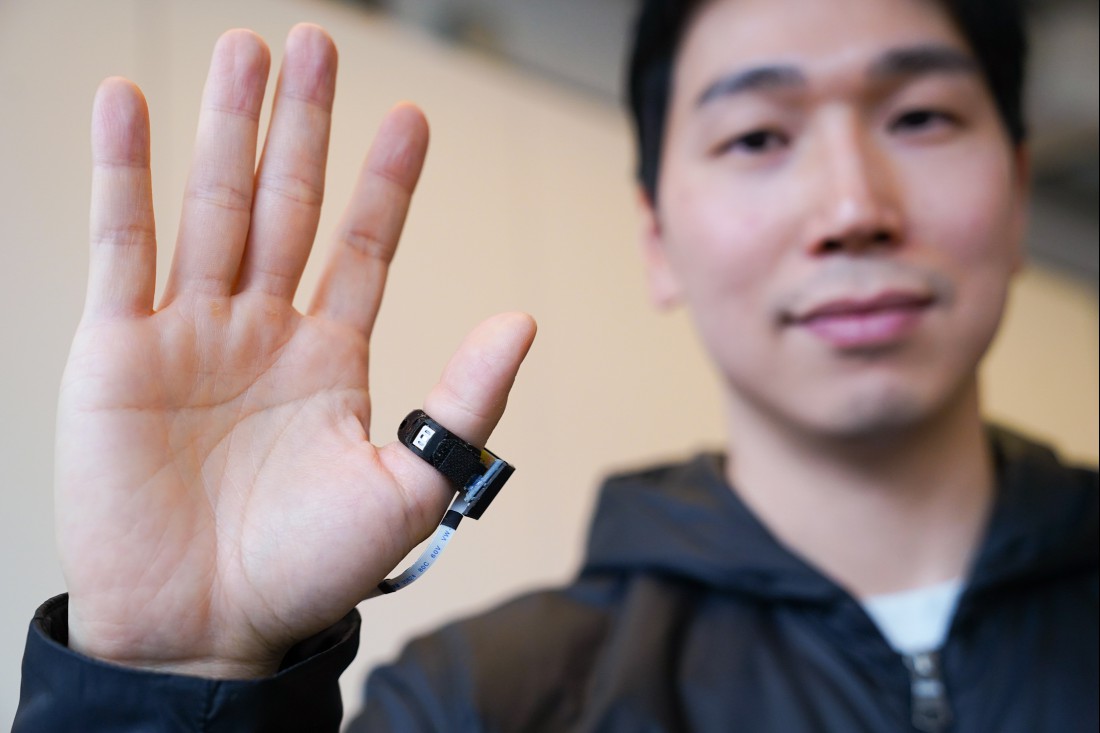

The smart ring segment has matured significantly over the past couple of years. We have entered the era of miniaturised sensors that are ready for ultrasound-based blood pressure monitoring. The likes of Circular are taking a different dual-sensor approach to measuring blood pressure levels, and are even eyeing glucose trend analysis by next year.
Health sensing, however, has remained the predominant application area for smart rings. Now, experts at Cornell University have developed a smart ring platform that can continuously track American Sign Language in real time, and send it as input to computers and smartphones.
Dubbed the SpellRing, it can recognize the full 26-letter range of the English alphabet pool. Worn on the thumb, this ring comes equipped with a speaker and mic array. Together, they allow the back-and-forth transfer of audio waves generated by hand motion, while a gyroscope measures the angular data.

While the idea already sounds like a major accessibility victory, the cost could further boost its adoption. The prototype kit developed by the team comes in at around $30, but they expect it to dip further when it enters mass manufacturing phase.
The 3D-printed ring, which is roughly the size of a quarter coin, relies on a custom deep-learning algorithm to understand the sonar image created by the onboard sensors. During their analysis, volunteers were able to spell out approximately 20,000 words in the English lexicon.

When tested among folks in the early stages of learning ASL, as well as experienced testers, the SpellRing delivered an accuracy of up to 92% at turning the hand signs into text. “ASL is a very complicated, complex visual language,” says Hyunchul Lim, lead author of the paper detailing the SpellRing, adding that they are now focused on tuning the algorithms to understand words and phrases.
As per the research paper, this is the first wearable-based device that integrates an inertial sensing system with acoustics to provide real-time ASL fingerspelling convenience. During their tests, the team showcased how it can be used to perform web search on a phone, handle map navigation, and type text in notes.

The team behind SpellRing is not pushing it as a universal solution, at least not in its current shape. Instead, they are promoting the idea of a fast and accessible text entry tool with its own set of benefits.
“Specifically, ASL fingerspelling can be significantly faster than typing on a smartphone’s virtual keyboard,” notes the research paper, which is going to be presented at the Association of Computing Machinery’s conference on Human Factors in Computing Systems conference in Japan next month.

The team is hoping to further build on their work by adding support for gestures and the ability to recognize words as well as phrases. On the hardware side, they are hoping to fit all the key components, including the intertial sensor (which currently is mounted on a separate connected board) on a single unified board.
Subsequently, a curved battery can be fitted into the kit and eventually turn the prototype into something that looks like an off-the-shelf smart ring, similar to those offered by Oura or Samsung. The team also envisions side-by-side development and integration with AR glasses, so that hand gestures can be tracked alongside vision-based interpretation for even more seamless conversations.

The man leading one of the most prominent and most powerful AI companies on the planet has just revealed what it is about AI that keeps him awake at n
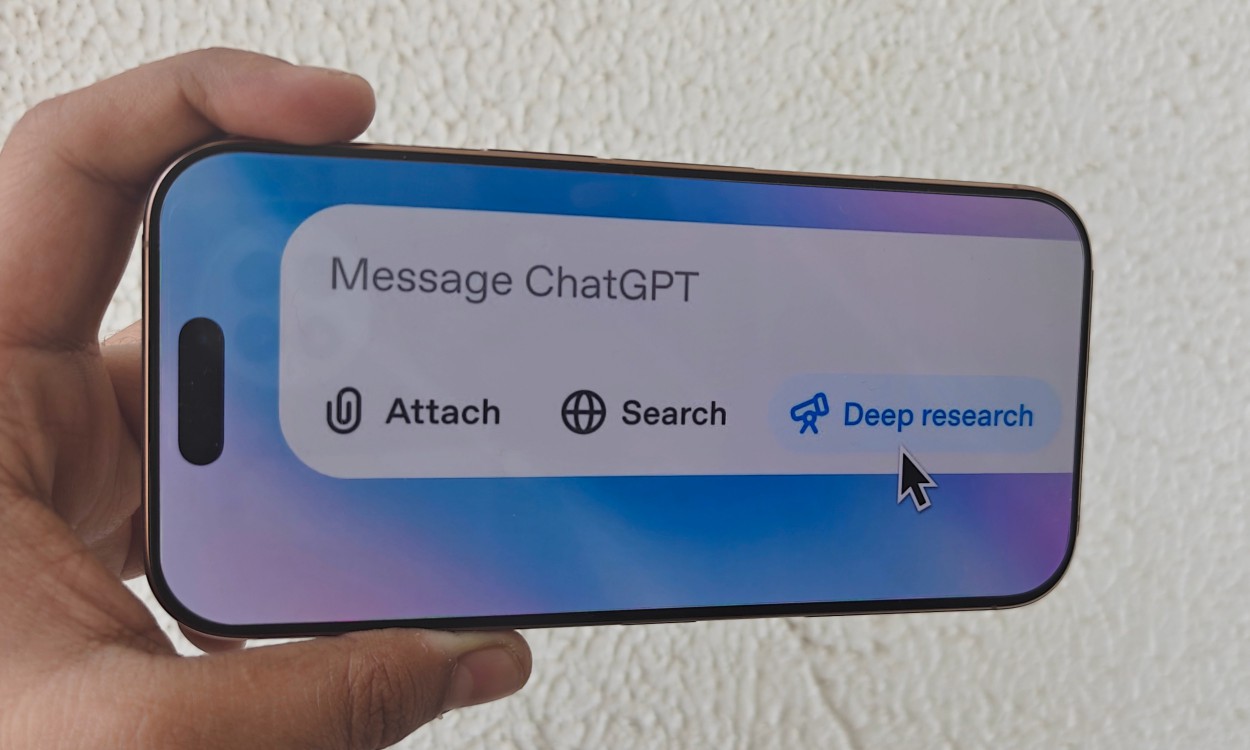
Artificial intelligence brands are in fierce competition, and their next steps are to make AI tools smarter by allowing them to execute deep search fu

OpenAI has just announced that ChatGPT received a major upgrade to its memory features. The chatbot will now be able to remember a lot more about you,
OpenAI has released its GPT‑3.5 Turbo API to developers as of Monday, bringing back to life the base model that powered the ChatGPT chatbot that took
OpenAI’s ChatGPT tool has found widespread adoption, from assisting with academic work and domain-specific deep research to speeding up drug discovery

OpenAI’s flagship service ChatGPT remains as popular as ever, with the brand having hit a 500 million active user milestone in recent days amid the St
We are a dynamic information platform dedicated to delivering timely, relevant, and reliable content across a broad spectrum of topics. From the latest in technology and business to lifestyle, health, and global affairs, we aim to keep our readers informed and inspired.
Our editorial team is committed to maintaining high standards of accuracy and clarity, ensuring that every article provides value and context in an ever-changing world. We believe in the importance of accessible knowledge and strive to make complex topics understandable for everyone.
Whether you're here to stay updated on current events, explore thought-provoking features, or simply learn something new, our goal is to offer a trustworthy source of information that meets the needs of a diverse and curious audience.