‘I lost my only friend’: GPT-5 gave ChatGPT a new personality, and it’s polarizing
With the launch of GPT-5, ChatGPT received more than just an upgrade — it appears to have gone through a personality overhaul. Comparing past chats wi

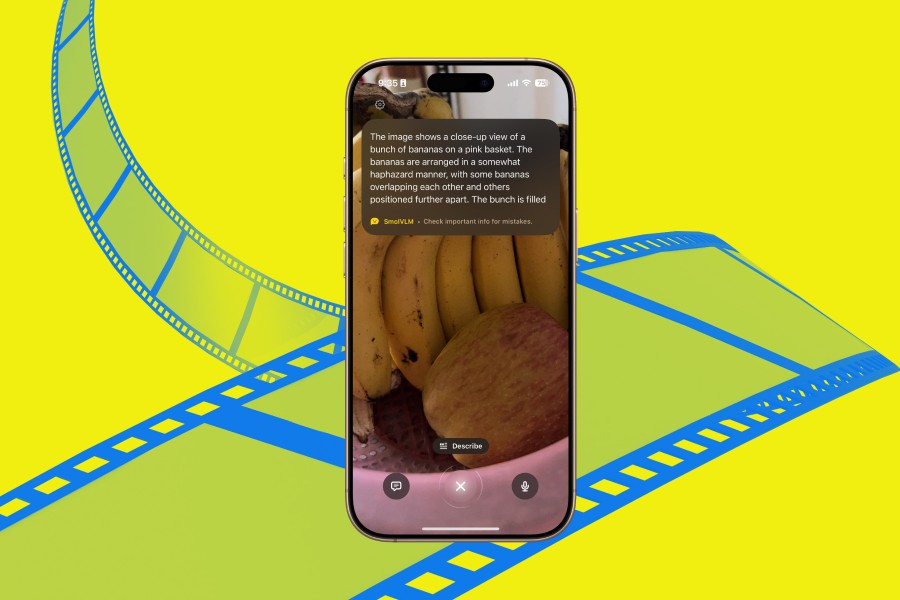
Machine learning platform, Hugging Face, has released an iOS app that will make sense of the world around you as seen by your iPhone’s camera. Just point it at a scene, or click a picture, and it will deploy an AI to describe it, identify objects, perform translation, or pull text-based details.
Named HuggingSnap, the app takes a multi-model approach to understanding the scene around you as an input, and it’s now available for free on the App Store. It is powered by SmolVLM2, an open AI model that can handle text, image, and video as input formats.
The overarching goal of the app is to let people learn about the objects and scenery around them, including plant and animal recognition. The idea is not too different from Visual Intelligence on iPhones, but HuggingSnap has a crucial leg-up over its Apple rival.
All it needs is an iPhone running iOS 18 and you’re good to go. The UI of HuggingSnap is not too different from what you get with Visual Intelligence. But there’s a fundamental difference here.
Apple relies on ChatGPT for Visual Intelligence to work. That’s because Siri is currently not capable of acting like a generative AI tool, such as ChatGPT or Google’s Gemini, both of which have their own knowledge bank. Instead, it offloads all such user requests and queries to ChatGPT.
That requires an internet connection since ChatGPT can’t work in offline mode. HuggingSnap, on the other hand, works just fine. Moreover, an offline approach means no user data ever leaves your phone, which is always a welcome change from a privacy perspective.
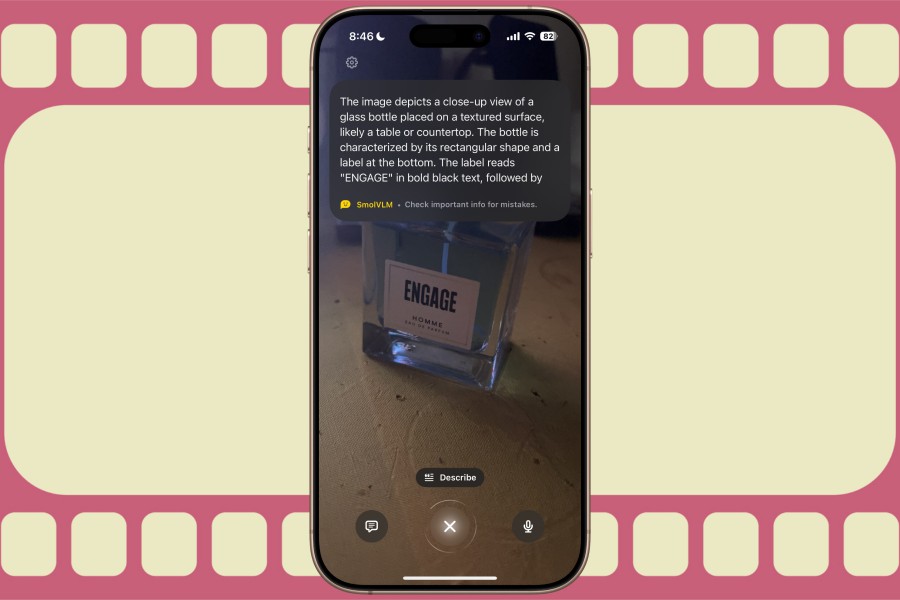
HuggingSnap is powered by the SmolVLM2 model developed by Hugging Face. So, what can this model running the show behind this app accomplish? Well, a lot. Aside from answering questions based on what it sees through an iPhone’s camera, it can also process images picked from your phone’s gallery.
For example, show it a picture of any historical monument, and ask it to give you travel suggestions. It can understand the stuff appearing on a graph, or make sense of an electricity bill’s picture and answer queries based on the details it has picked up from the document.
It has a lightweight architecture and is particularly well-suited for on-device applications of AI. On benchmarks, it performs better than Google’s competing open PaliGemma (3B) model and rubs shoulders with Alibaba’s rival Qwen AI model with vision capabilities.
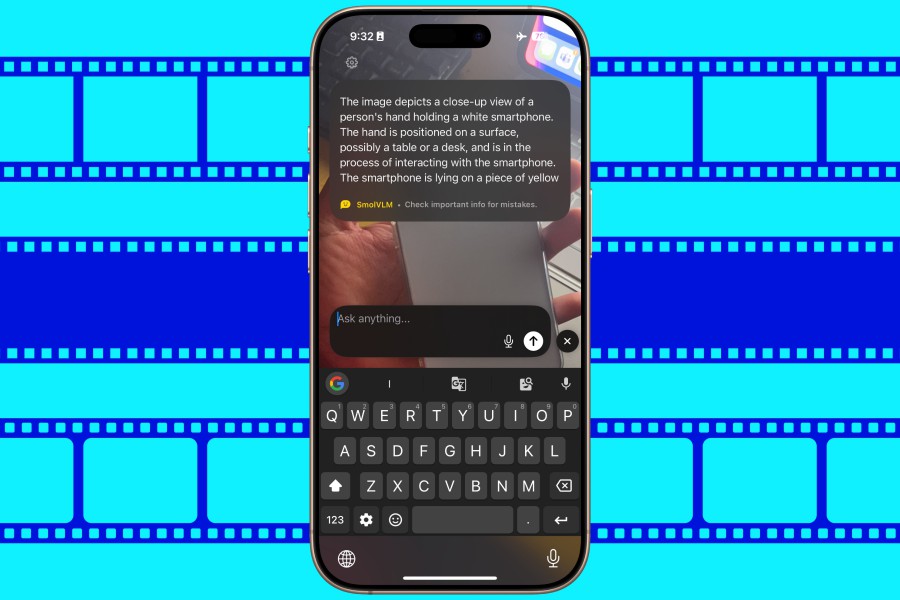
The biggest advantage is that it requires less system resources to run, which is particularly important in the context of smartphones. Interestingly, the popular VLC media player is also using the same SmolVLM2 model to provide video descriptions, letting users search through a video using natural language prompts.
It can also intelligently extract the most important highlight moments from a video. “Designed for efficiency, SmolVLM can answer questions about images, describe visual content, create stories grounded on multiple images, or function as a pure language model without visual inputs,” says the app’s GitHub repository.
With the launch of GPT-5, ChatGPT received more than just an upgrade — it appears to have gone through a personality overhaul. Comparing past chats wi

Chinese smartphone brand, Honor, is usually at the helm of camera-centric smartphone innovations and delivering ultra-slim foldable phones. For its ne

You may have occasionally joked about how companies these days seem to be falling over themselves to launch something, anything, that has AI, even jus
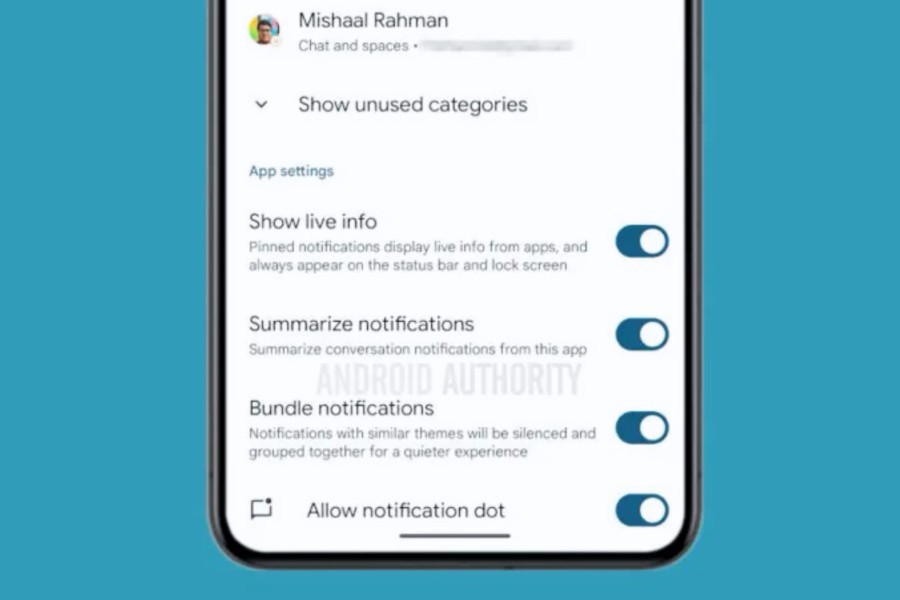
So far, Google has done an admirable job of putting generative AI tools on Android smartphones. Earlier today, it announced further refinements to how

Microsoft has updated the support page for the Windows 11 build it released last week to reveal a rather amusing bug — it seems to have caused some de
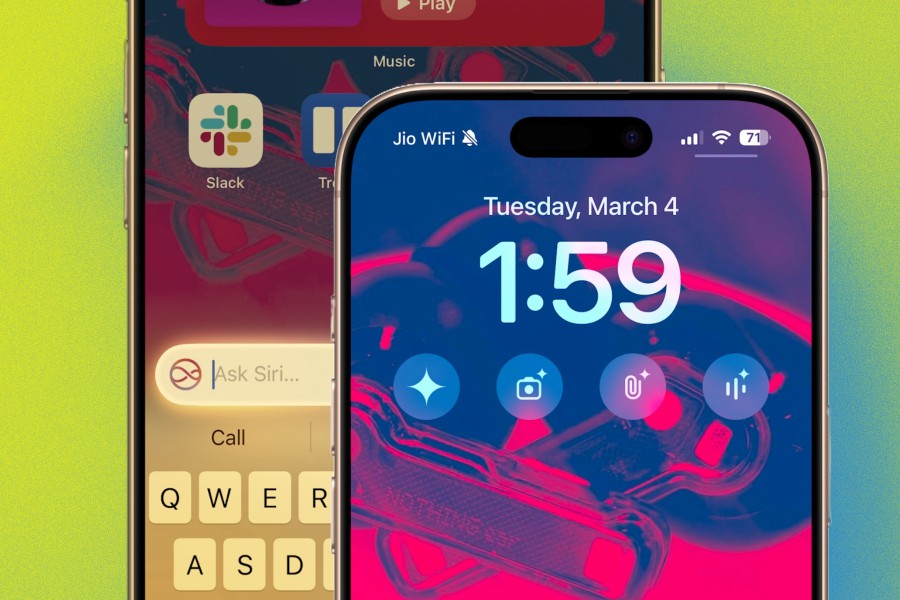
The AI frenzy has gripped every smartphone maker in 2025. Unfortunately, not all of it has been as revolutionary as on-stage presentations would have
We are a dynamic information platform dedicated to delivering timely, relevant, and reliable content across a broad spectrum of topics. From the latest in technology and business to lifestyle, health, and global affairs, we aim to keep our readers informed and inspired.
Our editorial team is committed to maintaining high standards of accuracy and clarity, ensuring that every article provides value and context in an ever-changing world. We believe in the importance of accessible knowledge and strive to make complex topics understandable for everyone.
Whether you're here to stay updated on current events, explore thought-provoking features, or simply learn something new, our goal is to offer a trustworthy source of information that meets the needs of a diverse and curious audience.