ChatGPT’s awesome Deep Research gets a light version and goes free for all
There’s a lot of AI hype floating around, and it seems every brand wants to cram it into their products. But there are a few remarkably useful tools,



When it comes to AI image generators, you’ve got your choice from dozens these days. Two standouts from that pack (which includes Dall-E, Firefly, Stable Diffusion, and Playground AI) are Midjourney and Grok 2 — the former with its well-deserved reputation of generating stunningly lifelike images, the latter known for being able to conjure onscreen virtually any idea imaginable, regardless of copyright restriction or longstanding societal norm.
Here are the essential facts you need to know about each.
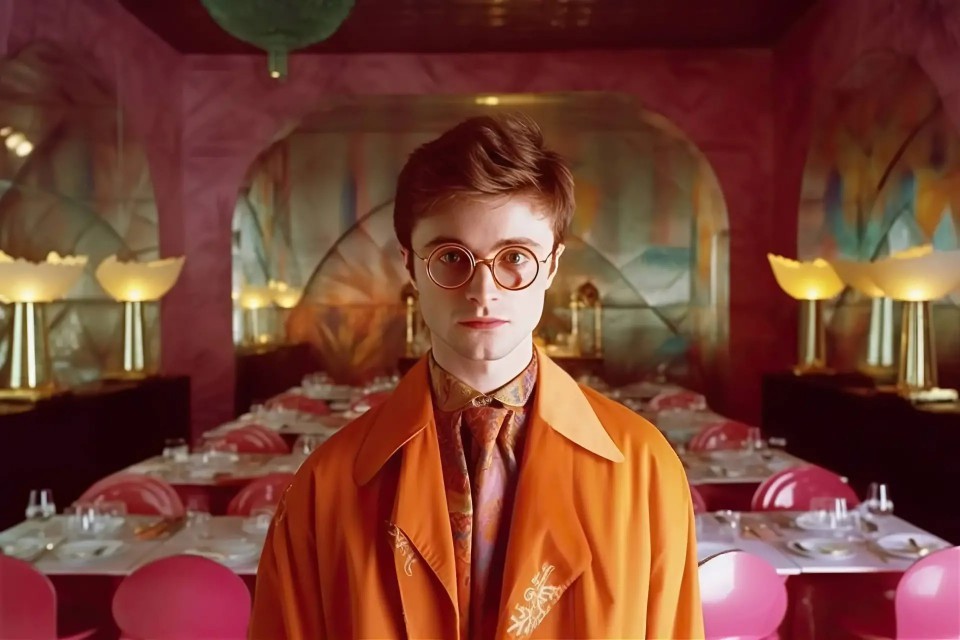
Grok is technically free to use but is severely limited to just 10 queries every two hours for users who don’t pony up for a subscription. X offers the X Premium account for $8 per month or $84 annually, which offers half as many ads and a “larger reply boost” as the baseline site experience. The more expensive X Premium+ tier costs $16 per month, or $168 annually, and removes ads entirely as well as allows you to write articles as well as posts. Both subscriptions will give you full access to Grok.
Midjourney, on the other hand, offers four levels of subscription, which can be billed monthly or annually. The Basic plan is $10/month and grants you 3.3 hours of Fast GPU time a month. You can buy more access time for $4 a pop. The $30/month Standard plan increases your Fast GPU access to 15 hours a month with unlimited “Relax” GPU time.
The $60 Pro Plan increases that to 30 hours of Fast GPU time monthly, as well as gives you additional slots in the processing queue, and for a whopping $120/month the Mega plan offers 60 Fast GPU hours a month. Also note that if your company makes more than $1,000,000 in gross revenue per year, you’re required to get a Pro or Mega plan.
Grok is a chatbot from xAI, the startup founded by Elon Musk after he quit OpenAI’s board over an issue of the company’s governance. The original Grok-1 model was released in November 2023 and, according to Musk, trained on a cluster of “tens of thousands” of GPUs. Grok-1.5 superseded Grok-1 in March 2024, and was itself surpassed by Grok-2, which arrived in August 2024. The latest version, Grok-3, launched in February.
Grok primarily operates as a chatbot, much the same as ChatGPT, Gemini, Claude, or Copilot do. It’s trained on a mix of publicly sourced internet data (with knowledge up to the latter half of 2023) and X user data — all those billions of tweets and community notes. Grok is unique in that it is tied directly to the X social media platform and can access information from it in real time, much like other chatbots can perform internet searches to find info on events that occurred after their knowledge cutoff dates.
This enables Grok to keep abreast of world events but also makes it more likely to hallucinate facts and return inappropriate responses to user queries, given its source material.
Grok 2 doesn't give a darn about copyright lmao
This will be fun while it lasts pic.twitter.com/qiiScOGt8I
— Brendon (@Bmaynze) August 14, 2024
The latest version of Grok is the first to offer image generation capabilities, thanks to its integration with the Flux.1 model developed by Black Forrest Labs. Grok-2 made waves when it debuted in August because, unlike other chatbots, its image creation capabilities do not have any discernible safety guardrails to prevent them from generating copyrighted, violent, racist, or otherwise harmful images.
Midjourney is one of the OG image generators of the AI revolution, alongside Dall-E and Stable Diffusion. It may not have a chatbot component like Grok, but Midjourney does create images based on your natural language prompt either through a Discord bot or the company’s web editor.
It can generate pictures in a wide variety of motifs, from cartoony animation and hand-drawn illustration styles to photorealistic glamour shots, as you might remember from the “Pope in a puffy jacket” meme of 2023. First released as an open beta in 2022, the AI has undergone multiple iterations with the latest, version 6.1, coming in late July 2024.

Midjourney has already made a name for itself as a premiere image generator, its art appearing on the covers of national publications like The Economist and The Atlantic. It even won first place in the digital art competition at the 2022 Colorado State Fair with its piece Théâtre D’opéra Spatial, which is pictured below.
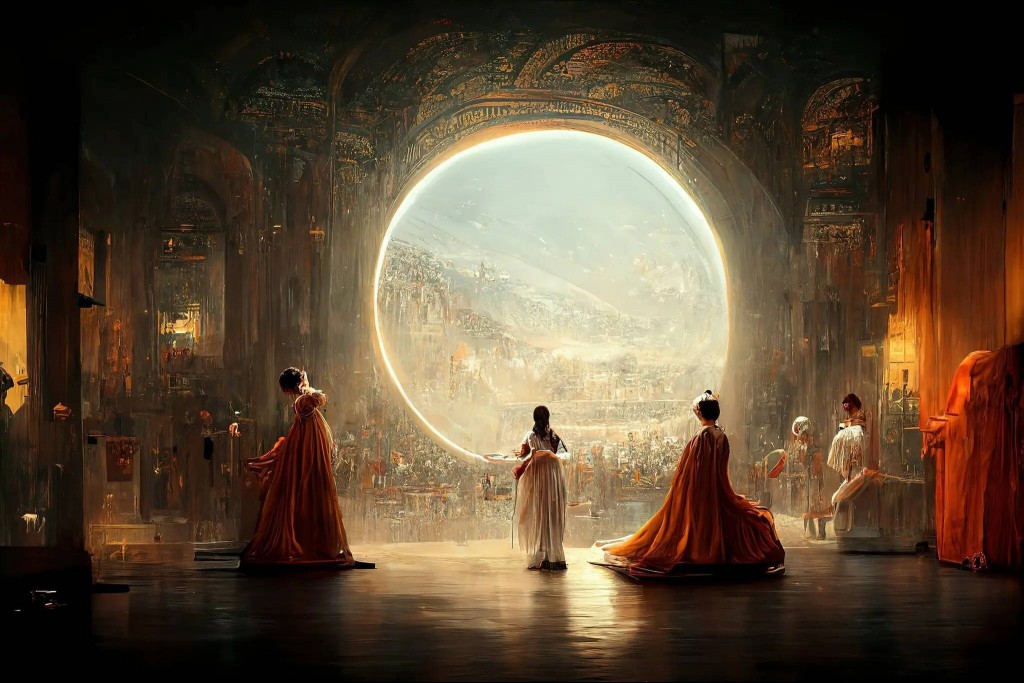
Unlike Grok, Midjourney (beginning with version 5) utilizes an AI-based content moderation system that is more nuanced than the banned word system it used previously.
Where the old system simply prohibited pornographic and violent themes from being generated, as well as specific keywords like the names of religious and political figures, the new moderation scheme offers more context-dependent leeway. That is, you can now generate an image of Chinese President Xi Jinping (which was impossible under the old rules), but you still can’t get one of him in handcuffs (unless you use Grok).
Midjourney, without question. It’s the more full-featured option and avoids the problematic entanglements that come with Grok. Grok’s lack of rules might sound exciting at first, but they raise some very serious ethical concerns — and ultimately, it’s just not as good as Midjourney yet.
There’s a lot of AI hype floating around, and it seems every brand wants to cram it into their products. But there are a few remarkably useful tools,
OpenAI has released its GPT‑3.5 Turbo API to developers as of Monday, bringing back to life the base model that powered the ChatGPT chatbot that took
OpenAI is set to be the next open-source AI brand as CEO Sam Altman confirmed on X on Monday that the company will soon release an “open-weight’ model
Today marks the 49th anniversary of Apple’s founding. The Mac and iPhone maker was created on April 1, 1976 as a partnership between Steve Jobs, Steve

xAI launched its Grok-3 AI chatbot merely a few days ago, but locked it behind a paywall worth $40 per month. Now, the company is offering free access
An AI expert has accused OpenAI of rewriting its history and being overly dismissive of safety concerns.Former OpenAI policy researcher Miles Brundage
We are a dynamic information platform dedicated to delivering timely, relevant, and reliable content across a broad spectrum of topics. From the latest in technology and business to lifestyle, health, and global affairs, we aim to keep our readers informed and inspired.
Our editorial team is committed to maintaining high standards of accuracy and clarity, ensuring that every article provides value and context in an ever-changing world. We believe in the importance of accessible knowledge and strive to make complex topics understandable for everyone.
Whether you're here to stay updated on current events, explore thought-provoking features, or simply learn something new, our goal is to offer a trustworthy source of information that meets the needs of a diverse and curious audience.